One Set or Many Locations? Choosing a Playable World
One set or many locations? Choose a playable script design that keeps the story clear while giving your amateur theatre company manageable scene changes.
Should your production use one set or several locations? Choosing between one set and many locations is easier when you begin with what changes in the story, rather than how many places the script names. A scene may need a new place to alter the characters’ choices, or it may only need a small shift in mood.
That distinction matters for an amateur company working with limited storage, people and rehearsal time. A single adaptable setting can preserve the story’s flow; separate scenic units can make distinct worlds unmistakable. The right choice is the one that gives the audience the information the action requires without creating work the production cannot repeat reliably.
Let the action define each location
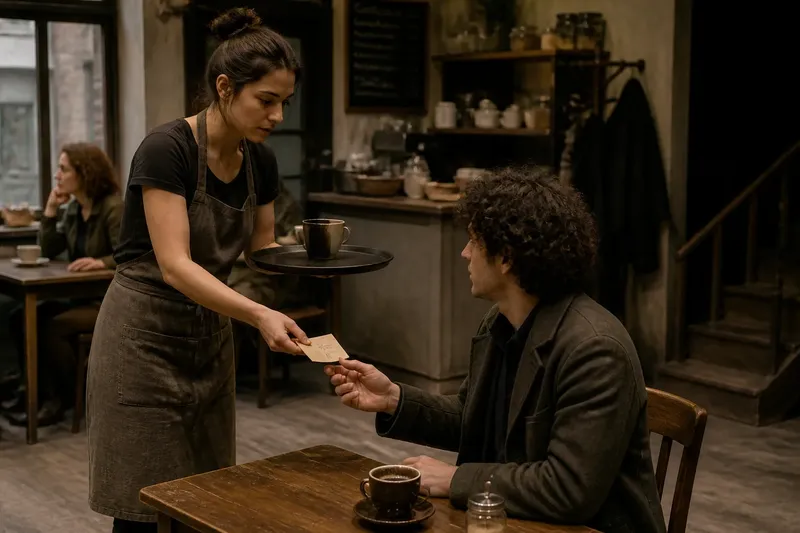
Read each scene change and record what becomes possible, impossible or newly important in the next place. An office may matter because a character can be overheard through its door. A garden may matter because someone can hide behind a wall. Those spatial facts deserve attention; a scene that merely mentions a different place may need only a lighting or sound cue.
For each location, note the essential action, the object or feature that supports it, and the smallest clear sign of place. Separate objects the actors handle from features that can be suggested through sound, light or movement. This keeps the design tied to the script rather than to a wish to furnish every setting literally.
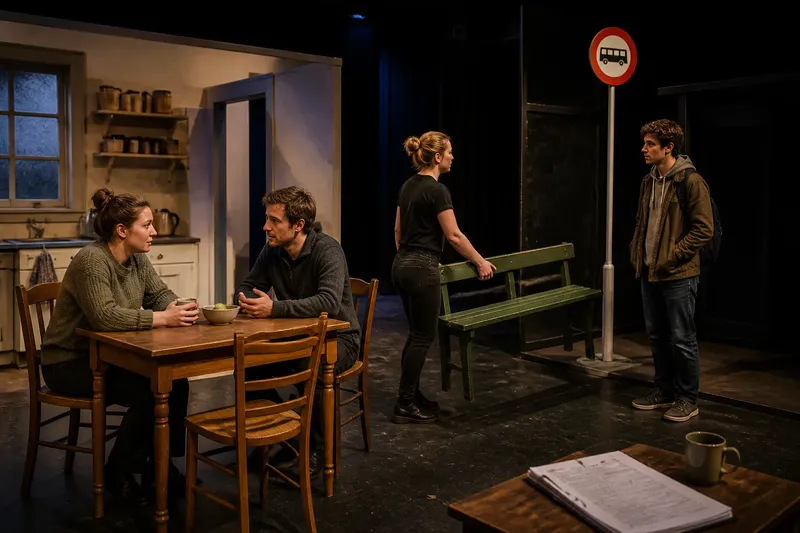
Say you are staging a play that moves from a kitchen to a bus stop and back. Imagine the company has a table, two chairs, a portable bench and a recorded bus sound. The kitchen scenes use the table and chairs; for the stop, an actor carries on the bench as the bus sound begins, while the table remains in place but is no longer used. The trade-off is a less literal picture of the stop in exchange for a prompt transition and a clear cue rooted in the scene’s action.
Choose a scenic approach that suits the play
A unit set is a stable arrangement that suggests several places through selective changes. It suits a play when the locations share a world, when the dialogue establishes place clearly, or when the production benefits from uninterrupted action. A few movable pieces, a doorway or a distinctive prop can do more useful work than a full room for every scene.
Separate sets create more specific environments, which can help when locations have different rules or strongly affect what characters can see and do. They also require a plan for storage, movement and resetting between scenes. A hybrid approach is often possible: retain a shared base, then add or remove one or two pieces for the locations that need a clear physical distinction.
Compare the options against the script and the venue, not against an idealised picture of the finished stage:
- Action: If a location’s layout affects a character’s movement or choices, preserve that feature; if it does not, suggest the place with a lighter cue.
- Recognition: If two scenes would seem interchangeable without a cue, give them distinct furniture, sound, light or actor behaviour; otherwise, keep the shared arrangement.
- Transitions: If a change interrupts an important exchange, reduce the pieces moved or use a transition that does not compete with the dialogue; if the change adds to the scene’s rhythm, make it part of the action.
- Storage: If the venue has no suitable place for spare scenery, design fewer pieces or use items already required in other scenes; if storage is available, still assign each item a clear use.
- Handling: If a scene change depends on a person or cue the company cannot reliably provide, simplify it or assign a workable alternative; if the task has a clear owner, rehearse its timing.
- Resetting: If an item is likely to be left in the wrong place after a scene, mark its home position or replace it with a simpler cue; if its position is obvious and repeatable, retain it.
Keep transitions proportionate to their purpose
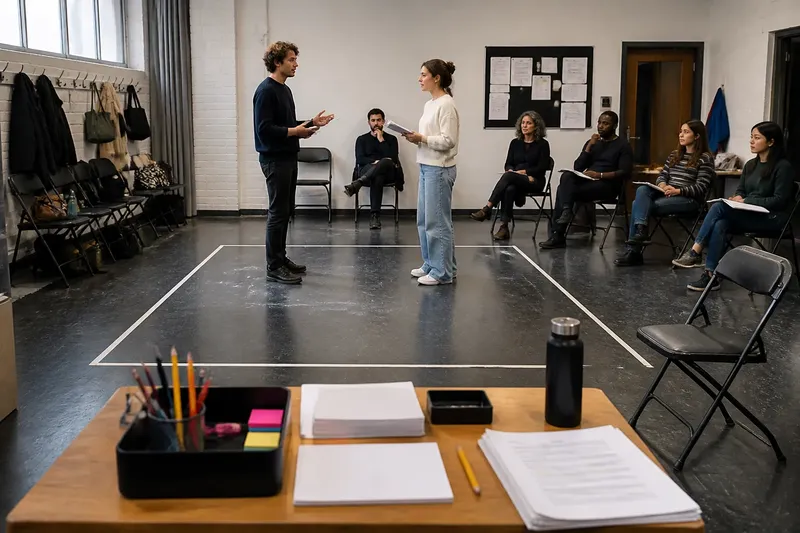
A scene change does not need to reproduce an entire room. Ask what must be moved, what can stay, and what the audience needs to notice before the next line. A chair carried by an actor may establish a new meeting place; a brief sound cue can suggest an arrival without a new backdrop.
In-view changes can suit a production when movement belongs to its style or gives the audience a useful link between scenes. If the actors must move furniture while the previous scene is still emotionally active, the task may distract from the moment. A lighting shift, sound bridge or short blackout can provide a cleaner handover, depending on the script and the equipment available.
Give every repeated change a clear owner and a reset plan. The person moving a bench needs to know where it waits, where it goes next and what happens if the next cue is delayed. A simple, consistent action is easier to repeat than a scenic arrangement with several loosely assigned tasks.
How do you decide what each place needs?
Can one set represent several locations?
Yes, when a small, consistent change makes each place distinct and the shared layout does not confuse the action. Keep the base arrangement if the story benefits from continuity; add a different cue where location changes what characters can do.
When should locations have separate scenery?
Use distinct scenic arrangements when the places have different spatial rules or when those differences carry important story information. If separate scenery would add handling without clarifying the action, a shared base with selective changes may serve better.
How can you choose which details to remove?
Ask whether each detail affects an actor’s action, helps establish place or carries information the audience needs. If none applies, leave it out; if one does, preserve the detail or find a simpler way to express it.
What if a location is clear in the dialogue but not on stage?
Keep the dialogue, then add one early scenic, sound or movement cue that supports it. If that cue would contradict the action or obscure an actor’s choice, use a different signal rather than adding decorative detail.
Choose a design the company can repeat
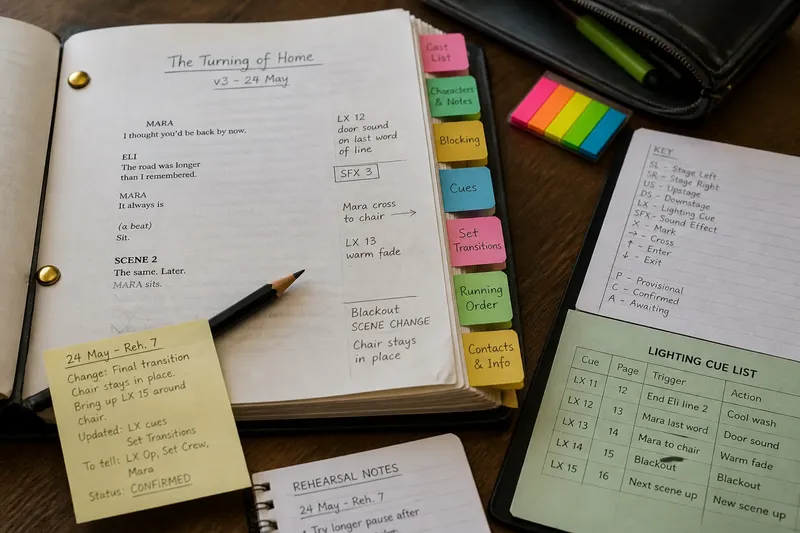
Before settling the design, make a scene-by-scene list of location cues, who handles them and how each item returns to its starting place. Check the venue’s available storage and equipment, and make sure the plan fits the company’s actual crew and rehearsal arrangements. If equipment use or venue rules are unclear, ask the venue for guidance.
One set or many locations is not a choice between ambition and compromise. It is a decision about which changes carry meaning and how simply the company can express them. Keep the main phrase in mind: the best choice between one set and many locations is the one that lets the action remain legible while every transition has a clear purpose.