A First Read-Through with Room to Listen
A first read-through can reveal a play’s pace, silences and turning points before the cast commits to character choices or starts staging scenes.
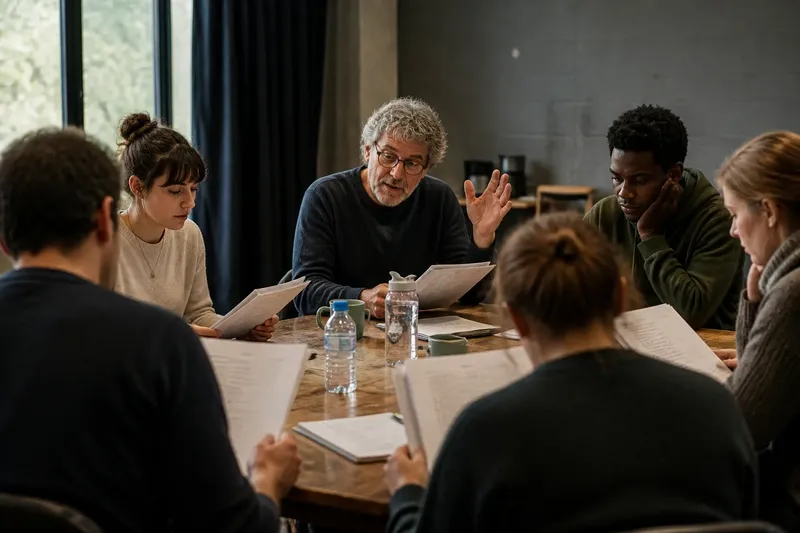
How can a director hear a play’s shape before actors settle on character choices or begin staging scenes? A first read-through gives the company a shared encounter with the script: the words can land, the story can unfold, and attention can shift without each moment being explained as it happens.
Set a clear purpose before the first line
Tell the group that this session is for hearing the play from beginning to end, not for auditioning, learning lines or deciding on a single interpretation. That distinction helps actors read openly rather than polish a performance they think the director wants.
Explain how you will handle unfamiliar words, missed lines and pauses. Choose one person to read stage directions aloud, or agree that everyone will read them silently. If a direction signals an important change in place or action, make it audible and clear.
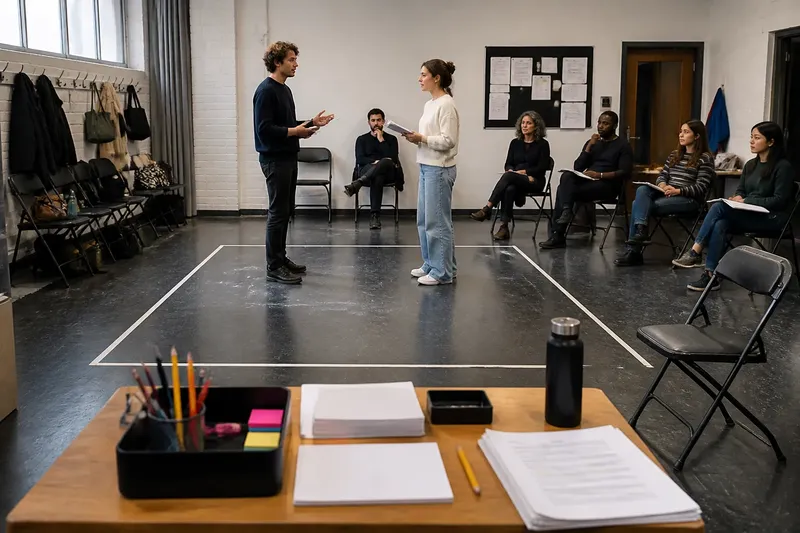
Keep the set-up simple: chairs, scripts and a table for water are usually enough. Ask readers to stay seated unless standing helps them speak or hear one another. Early movement can make an interpretation appear settled before the language has had a chance to suggest alternatives.
Keep the play moving without rushing it
Read at a pace that gives listeners time to follow the thought, but avoid stopping to solve every awkward line. A stumble might come from an unfamiliar name, a dense sentence or a character avoiding a direct answer. The director can clarify what is needed to continue, then let the scene move on.
Allow silence where it is written or emerges naturally. A pause might signal uncertainty, resistance or the time someone needs to respond. The first reading can show how the silence affects the room without requiring anyone to settle its meaning.
Resist adding gestures or business to fill every gap. A deliberately plain reading makes it easier to hear the structure of the dialogue and notice when a scene changes direction.
Listen for the play’s larger shape
Once the final line is read, leave a little quiet before opening discussion. Invite the company to describe where their attention sharpened, wandered or changed. These are reports about the experience of hearing the whole play, not votes on whether it is good.
Ask questions that connect moments across the script. “What changed for you as the play continued?” can draw attention to shifting knowledge or allegiance. “Where did you want more time?” may reveal a point the audience needs to absorb, even if the staging remains undecided.
Hold detailed production choices until everyone has heard the full arc. An entrance that seems confusing in one scene may make sense after a later revelation; a speech that first sounds incidental may alter how the ending feels.
What should the group discuss after the read-through?
Should actors prepare character choices beforehand?
Actors can arrive familiar with the text, but the director can ask them to leave fixed voices and physical habits aside for this reading. That makes it easier to hear how the language works before a particular approach shapes it.
Should the director give notes during the reading?
Usually, save notes for the end or a break, stepping in only when the group needs a quick factual clarification to continue. Naming a speaker or confirming the page order keeps the reading on track without turning it into a rehearsal.
What if listeners respond differently to a moment?
Let each response stand without forcing agreement. If one person laughs at a line and another feels uneasy, the contrast can prompt a useful rehearsal question about the line’s effect and delivery.
How can the discussion stay focused?
Ask for descriptions of what listeners heard or experienced before inviting explanations. “The pace slowed after the announcement” gives the group a shared moment to revisit; “the character is dishonest” settles an interpretation before the company has explored it.
Use observations to plan the next reading
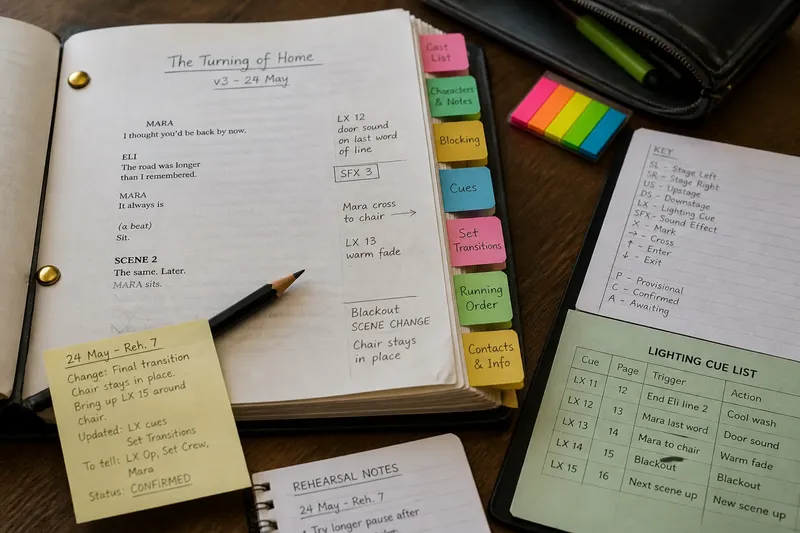
Choose a few concrete questions that will shape the next session. For instance, the company might reread a transition to see whether the change of place is clear, or follow a recurring image to hear how its meaning shifts. Each task should identify a passage and a listening purpose, rather than prescribe a performance result.
Say the group reads a scene where one character keeps offering tea while another avoids a direct question. The starting point is the dialogue as printed, with no extra gestures. The director asks listeners to notice when the offers occur and what follows each one; the cast then rereads the scene, leaving the offers unembellished. If listeners still attend to the unanswered question, the director has a reason to explore that tension in rehearsal; if the offers draw attention away from it, the company can try a different delivery and compare what the words make clear.
A first read-through with room to listen gives the director a specific starting point: how the script sounded to a company hearing it together. Use those observations to choose what to revisit, and let each later reading answer a defined question before turning it into a staging decision.